Search This Blog

Wednesday, 17 June 2020

(12) SHORT PD BREAK...

(12)  PD BREAK

Dear Reader
I will be away and without access to the internet till early July when I'll do my next post and share PBM insights - till next time, stay safe.
Ari

Saturday, 13 June 2020

(11) PD and PBM

NB I am sukkeling to sort the comments section 😒  - if you want to comment, then please sms me at 079 5085170 or email ari.naidoo@gmail.com

Lockdown reward


After I was diagnosed with Parkinson's Disease (PD) in 2013 my life became increasingly constrained, both psychologically and physically. While I occasionally justified an "off" day using my age, unfit state or hypertension, this was not realistic. So, in February 2020, I contacted the neurologist who featured in a December 2019 Carte Blanche documentary mentioned in my last post. The earliest appointment at the Durban Neurolaser Clinic was mid-June 2020. 


I was told by the receptionist that an initial assessment by the neurologist would be followed by a series of roughly one-hour laser therapy sessions. However, as the Coronavirus lockdown period resulted in his many patients not being able to travel to KwaZulu-Natal, I was able to secure an earlier assessment followed by the initial phase of therapy. (His busy schedule indicated public interest in the approach.) The neurologist explained that I would need to complete a series of ten carefully spaced treatments and then take a months' break. 


What I noted from that first assessment interview was that it would be up to me, as the patient, to do the pre- and post-treatment assessments. These comprised physical tests of gait (walking) and fine motor skills (finger and hand actions) using videoclips. I decided to add writing, typing and hand dominance. As a practitioner researcher - this was described in an earlier post - his "subjective" evidence approach suited me: I would have to evaluate what was happening to me.


Simply red, in black and white


As a result of our being in stage 4 of the lockdown period during my therapy, the Durban Neurolaser Clinic sent me a permit to travel and as their rooms are at a hospital, I felt relatively safe going there. I was instructed to wear a mask and to bring gloves. There were stringent precautions at the hospital entrance before entry with two staff recording each patient's details, body temperatures and sanitising before allowing entry. Every one of the members of staff inside the clinic wore full personal protective equipment (PPE), consisting of a white onesie, white booties, white masks and white goggles. "Area 51" often crossed my mind and made me smile.


For the first week of therapy, besides working out gender, I had no idea of who was assisting me as they all looked singularly similar except for their height. This was a tad confusing as I was making notes after each therapy session regarding what exactly occurred, who did what and how. All I was aware of was four voices, accompanying accents and their varied approaches to initiating therapy. For obvious reasons, I had opted not to wear my hearing aid, which made things doubly difficult.   


Photobiomodulation


The primary treatment apparatus consisted of being exposed to a flexible pad, about 30 cm long and 10 cm wide (as shown above) while the secondary treatment apparatus consisted of tracing by two laser probes, one red and one black. During the secondary treatment, I had to wear special dark glasses. 


The primary pad contained a combination of super luminous red and low level Infrared diodes combined into a single diode. This pad was placed on various parts of my cranium, base of the skull and once on my stomach. During each day's treatment, the pad was used in three different areas for about 12 minutes each, depending on the programme. That was followed by about 10 minutes of the two hand-held lasers (manipulated by "Area 51" staff) meticulously tracing patterns around the front, top and back of my skull.  


The total treatment time for PD - thrice with the pad and twice with the red and the black probes - depending on the programme, was just under an hour per day for ten days. The recommendation was for the first five therapies on consecutive days and the remaining five on alternating days.  


From what I have read, the function of the diodes is for light energy to penetrate the skull through the radiation so it may be absorbed by cells' membranes. The resulting complex reactions are physiological in nature. Seeing that the blood vessels are dilated during treatment I always felt warm during therapy. In the 10th post, I cited an excerpt from an article regarding scepticism in the field of photobiomodulation (PBM) that, hopefully, piqued your curiosity. I will not attempt to further fine-tune what occurs. If you're interested, then do use Google or Safari or Duckduckgo or other search engines, dear reader.


Next time I'll share what I feel like after the first couple of weeks of PBM for PD.   


Saturday, 6 June 2020

(10) PD, no lights, no action

Seven years' dark days

Since my diagnosis in 2013, I have avoided taking any Parkinson's Disease (PD) medication, a decision reinforced after viewing the movie "Awakenings" and the GDNF trial documentary, both of which have been reviewed in earlier posts. In both instances, I was made to understand that little can be done to reverse PD, neither by (a) PD medication nor by (b) invasive surgery. Hence, it was reasonable to assume that an alternative approach that does not include (a) or (b) - for which there is anecdotal evidence, but few large-scale clinical trials - would be an avenue to investigate. The Australian trial stopped data collection in 2019 and I hope their results will be published soon.   

When I decided to trust in the power of the original me to cope with darkening days, what I could not foresee was the force with which my body and mind was to be hijacked by the intruder. This takeover has been especially noticeable in the shift in my hand dominance and becoming more of a threat than I thought it would be. One of my few remaining pleasures, driving our car, has gradually also become a challenge. I might have to stop long distance road trips by 2021, because of worsening motor control (excuse the pun!). So, what now? 

Observations made by Palfreman (2013) (the L-dopa Conundrum appeared in an earlier post) regarding motor complications (MCs) are significant. An important one is that the presence of some MCs and possible side-effects on patients taking PD medication result in their having a few "off" days per week, when MC's prevail and symptoms can worsen. This is offset by having symptom-free "on" days. As a parkinsed person, I also have "on" and"off" days, but, without chemical dependency. 
 

Some light

In December 2019, M-Net's Carte Blanche broadcast a documentary regarding the use of low-level Infrared (or near Infrared) light to treat those with PD. The ten minute programme described therapy that was not invasive, caused no physical damage to the brain and was available in South Africa! I will describe aspects of the treatment that, hopefully, will make sense.

According to the Durban Neurolaser Clinic laser therapy is "the use of light from a Low Intensity Laser Diode or an array of Superluminous Diodes to eliminate pain, accelerate healing and decrease inflammation...[and is] also known as...low intensity laser therapy or photobiomodulation therapy." The clinic also treats neurological conditions, such as PD. Naturally, I was curious about this therapy, so I did some online research, and found pros and cons.

Photobiomodulation therapy for PD

The general scepticism of photobiomodulation expressed by medical experts (including some of my own parkinsed friends who subscribe to drug therapy) relate to the absence of clinical trials and accompanying evidence. As one who has been parkinsed and who is not a medical doctor, again, I assume that the pharmaceutical industry and medical science would be sceptical of any PD therapy where no drug is present to address the problem. 

According to Hamilton, et al. transcranial photobiomodulation therapy yielded positive results on PD patients and their tremors, gait and writing. There was significant improvement in most patients in their sample. These writers' view of medical scepticism regarding photobiomodulation is based on their belief that "the concept of light inducing chemical and metabolic change in neurones appears difficult to accept by some colleagues, although they have no trouble accepting the concept that a drug can induce a change..." (Hamilton, et al. page 1739).  

Should I consider transcranial photobiomodulation therapy? More about this next time, dear reader.


Saturday, 23 May 2020

(9) Another PD bond: shaken and stirred.

"Words, words, words."

The above response of Hamlet to Polonius has been ringing in my ears for years (I have tinnitus too) but let's contextualise this before continuing with my Parkinson's Disease (PD) story. 

I believe I am a wordsmith. For example, after a 2014 road trip from Gauteng to the Northern Cape to see the Namakwaland daisies in their magnificence, our journey included 160km of gravel road between Calvinia and Sutherland: a tiring, two hour trip! When I returned to Gauteng and started writing our daisies trip story, I created the word "gravelling", combining long distance "travelling" with "gravel". The Oxford Dictionary office responded to my email query about this word, stating it had not been used in that context before. Naturally, I was chuffed. In this post I introduce "trevers", combining "tremors" with "shivers" in the PD context. 

While there is a distinction between essential tremors (ET) that often occur with ageing and resting tremors as a result of PD, the product of each is similar: tremors that are debilitating and draw attention. There is also primary dystonia, that generally leads to repetitive turning or twisting movements in body posture: it presents as an abnormality similar to but is not PD. In addition, I sometimes have mild tremors followed by sweating which is the result of low blood sugar.

I used to cope well with cold weather in Gauteng until the arrival of my PD. Since 2018, I have spent winters at the KwaZulu-Natal coast where it is warmer than Gauteng and my tremors do not morph into 'trevers'. Naturally, going to the Drakensberg region at any time of the year can trigger bouts of 'trevers'. Tremors and shivers tend to be sympathetic and the result is that 'trevers' can be more intense and less controllable than resting tremors. 

"I'm all shook up, Mm mmm oh..."

The challenge for me as a parkinsed person is my tremors draw attention to my abnormality. It is almost like left-handedness but more conspicuous. I have seen motorists and cyclists staring at me bumbling across pedestrian crossings in Gauteng, on the rare occasions when I have walked to a shop. Not confident, unfit, stooped and rigid, their stares made me more self-conscious. Even my claim of being a wordsmith could not rescue me when crossing a road. So, all I can do in such a situation is to keep moving and to start a song in my head. One that provides a constructive distraction was recorded by Elvis Presley and called "All shook up". It is a quirky way of coping, and most of the second verse lyrics are appropriate:

"My hands are shaky and my knees are weak 
I can't seem to stand on my own two feet
Who do you thank when you have such luck?
I'm in love
I'm all shook up
Mm mm oh, oh, yeah, yeah!"

Observation, tips and tricks

My resting tremors manifest as a visible activity under my skin. I can actually see it in my limbs when I am still, I can see a resting tremor being generated. It occurs just below the skin and looks like a continuous wave-like action. If unchecked, I believe my muscle memory would increase the intensity of such a repetitive 'shaky' action into a 'new normal' action mentioned in an earlier post. This is concrete evidence of the intruder having hijacked my system.

When it is very cold, my body needs to constantly contract and relax my muscles resulting in shivers that produce heat. The whole body shivers visibly. 'Trevers' represent the combined presence of shivers and tremors. As both activities are similar, in my opinion, they feed off one another, almost forming a symbiotic relationship. I have observed that the shivers across my whole body gradually disappear as I warm up, while the tremors in my limbs remain for a longer period. 

TIPS FOR ME: Identify and eliminate triggers caused by unfamiliar environments. For instance, meeting doctors for the first time, standing in queues, watching horror movies, etc. Such events create tension leading to tremors in my limbs. (1) For relief when seated, I do repeated shoulder hunches as far forward and as far backward as possible. Then, I raise my feet off the ground to knee height, or constantly cross one foot over the other to ease the tension. (2) If I am standing, then I constantly shift all my weight from one leg to the other. This is easier with a walking stick. (3) Merely holding or touching a small stress ball in the palm of my hand without squeezing it, gradually eases my tension and reduces the intensity of my tremors. 

Next time I will share my thoughts on photobiomodulation therapy, also known as low-level laser therapy. 


Saturday, 16 May 2020

(8) PD & dexterity: go left, right?

Why is it right?

QUESTION: Does my right hand know what my left hand is doing? ANSWERS: (i)Yes. (ii)I suppose so. (iii)Maybe. So, what about dexterity?

The Latin word sinistere refers to "left"or "improper". In English sinister means something "evil". When considering hand dominance, there's also mixed-handedness (where one can play sport with the left hand but write with the right hand) which leads to the notion of dexterity. But, let's return to the matter at hand, namely, how Parkinson's Disease (PD) hijacked my dexterity! A geneticist or neurologist could shed light on prevailing theories on hand dominance.

At varsity, a student in class had an accident just before exams. She fractured her right hand, her writing hand. She sat for exams a few weeks later but wrote with her left hand. She was the very first ambidextrous person I had come across and I was impressed. However, there was a time when she would have been discouraged from doing so because of the "sinistere" stigma.
 
I was born right-handed. At high school, StephenF and RenukaV, both of whom were left handed, always gave me a run for my money when we played table tennis. As a right-handed player I had to be shrewd as a ball returned by a left-hander would spin differently. I had to be observant. Fast-forward to 2016 and I noticed something else regarding dexterity and hand dominance.

PD & shifts in dominance

Sometime during 2016, I observed that my right side was struggling, so that my right hand and leg actions were less fluent. At the time I did not consider PD tests, including a dexterity test, such as the simultaneous tapping of the thumb and forefinger. Currently, I am only able to sustain such a tapping movement, at regular and increasing speed, with the left hand. My right hand is able to start the tapping, but, after a few seconds, the action falters and stops.

A good idea for parkinsed people is for a social worker to assess their level of independence. If you have not done so, then please consider the possibility. I did so a few months ago and wondered why I had not done so earlier. I was probably in Egypt, in denial (pun...).    

I have observed hijacked dexterity when washing pots, plates, dishes and cutlery. For the past few years I have used my right hand to hold items to be soaped and the left to hold the soaped sponge. However, pre-PD, I used to hold items to be washed in my left hand while soaping them with a sponge in the right. With the advent of my PD, it has been deemed necessary by the command centre - my brain and other systems - that my hand dominance should be shifted, probably to make more efficient use of the remaining systems.

Another example of hand dominance shift is my driving a vehicle with automatic transmission. My wife observed a few years ago that my right hand had gradually become passive and often rested on my right thigh while the left hand controlled the steering wheel. One-handed driving is an unsafe technique especially long distance. Putting on a shirt provides another challenge: first I put my left arm into the left sleeve followed by a gargantuan struggle for the right shoulder and arm to get into the right sleeve. By 2019 my wife needed to help me get my arms into sleeves. 

PD doesn't have to cost an arm & a leg 

The onset of PD and increase of right side involuntary tremors has meant that tremors in my right leg and arm have also increased in intensity. This has also meant that my right side coordination and muscle activity has also started to decrease, leading to loss in muscle tone and strength. I believe this has also resulted in a generally painful right shoulder and upper right arm. I was aware of the onset of Bradykinesia but not of the shift in dominance.          

I discovered recently that my sore shoulder could be sorted through Biokinetics or regularly attending Dance for Parkinson's sessions. During my search for drug-free remedies I came across Sensoria's work on smart socks that also attracted the Michael J. Fox Foundation to sponsor their clinical trial. The idea of smart socks telling one to lift up heels or toes led me to a simpler option, namely, wrist weights on either wrists or ankles. They did not cost me an arm and a leg and work 70% of the time.

TIP FOR ME: I realised that when walking, the PD hijacking of my internal communications had resulted in me dragging my right foot. One remedy was spending a few thousand rand on Sensoria socks while another would be to wear a wrist weight. Wearing such a weight on either my right foot or leg on alternating days of the week is a physical reminder for me to lift up my right foot or to swing my right arm when walking. This is done in conjunction with corrective messaging described in a previous post. This works quite well most of the time. These weights are not allowed aboard a plane but may be in one's stowed luggage. Wearing my watch on my left wrist also reminds me to swing my arm but is less effective because it is lighter in weight.       

With apologies to Beyoncé 

TIP FOR ME: to the right! American singer Beyoncé Knowles has a song called Irreplaceable, the introduction to which has the now popular phrase: "To the left, to the left: everything you own in a box to the left". During the past two years one of my dexterity corrective messages when washing dishes has been: "To the right, to the right...". However, I have discovered that reliance on corrective messaging is not always effective, so I wash with left dominance and rinse with right dominance. Also, during rinsing I ensure that my right hip is forward and closer to the sink than the left one. 

When driving I use the corrective message "both hands on the wheel" when I notice any one handed driving. So far that has helped. 

Till next time when I'll share my thoughts on why typing and the cold weather may be a challenge for parkinsed people.   


Thursday, 7 May 2020

(7) Balance and PD

The balance  


I've had a few memorable falls since being diagnosed with Parkinson's Disease (PD). Each is 'memorable' because I have a vivid recollection of them and each has helped me figure out what to avoid in the future. One fall was when we were camping (I stumbled backwards and bent a tent pole), another in our bathroom (I stumbled backwards into the shower), a third was embarrassing and at OR Tambo airport (I tripped and fell in international arrivals), one in a Durban mall (I tripped on the stairs) and the sixth was in a packed Port Elizabeth restaurant. Each fall is a reminder of my dis-coordinated self. (Do Victoria or Niagara have PD?) 

Getting up and off a chair in a confined space is one of my challenges, because I am struggling to perform three actions simultaneously. First I have to stand up, next push a chair backwards, then balance in a semi-standing position while slowly walking backwards as I move away from the table. When a table cloth obscures the position of a table leg, then that can catch my foot and cause me to stumble backwards. This is why I fell backwards in a busy Port Elizabeth restaurant. Luckily, as I move slowly, a patron sitting behind me predicted what was about to happen and caught me before I hit the concrete floor. Phew! 
   
When I start a backwards movement - either consciously or not - I believe PD has made it difficult for me to control the momentum, so I keep going backwards. Hence, walking or stumbling backwards, often leads to my falling over or onto something I am unable to see or may have forgotten is there. It feels like an animated version of me falling in slow motion, with the 'other me' observing with amusement. So, I avoid walking backwards.

TIP FOR ME: besides doing a thorough check of my environment, I have discovered that to stand up from a chair, it helps if I first look at a spot (more of this "spotting" action below) in front of me, at eye level, before telling myself to straighten both knees. Then, when I stand, the result is a fairly smooth action where I can stand up, confidently balanced, while sliding the chair backwards. Naturally, it also helps when the floor has a smooth surface. Outdoor seating on a beautiful gravel surface is terrible for a parkinsed person!

However, falling on stairs - either ascending or descending - is likely due to poor concentration and little to do with PD.

Train spotting

A long time ago I was a modern dance instructor. A cool strategy for introducing a dance turn - also known as a pirouette - was to teach students spotting during their training. When attempting a quick turn, one's body tends to be unfocused and wobbly at the end of a 360 degree turn. Initially, it can also lead to dizziness. To correct this, one should focus on a spot at eye level on a wall, or focus on a person in front of you. One's head should whip around slightly before the body does. After the 360 degree turn, the head and the eyes must return to fixate on the same person or spot on the wall. Then, the whole turn is less wobbly and one should not be dizzy. I have found a different reason to train myself to use eye focus.

One of my many frustrations is dressing, specifically, putting on shorts or underwear, as I need to be seated at the edge of the bed in order to very slowly angle my foot inside the pants' leg. I was unable to do this from a standing position - unless I was leaning against a wall - as I tended to fall over. Then I tried part of a spotting procedure. Holding the shorts in front of me while standing, I focus on a spot either on the wall in front of me or on the floor.

TIP FOR ME: when dressing, I have discovered that if I stare at a spot, I am able to raise one leg and can balance fairly safely and confidently, in order to put one foot into the shorts without staggering or falling over. I follow the same procedure to get my feet into sandals or shoes from a standing position. I have noted with interest that even getting up from a chair or the bed - as described above - is easier and I am more confident when I stare at a spot in front of me.

PD & predictability 

Seven years ago, if someone had asked me to predict the future, I would never had thought about a virus causing a pandemic resulting in a lockdown, or about the Aeromobil being exhibited at a car show. The same applies to my being parkinsed and how I would cope without taking PD meds. A large part of the impact, mentioned in an earlier post, is how this intruder has hijacked my body and systematically eroded my confidence. PD stages and symptoms are generally similar but the impact of chronic PD meds on individuals is not predictable. Like the GDNF trials or Levi-dopa in the movie Awakenings in earlier posts, different PD meds appear to have different results on different people. 

Composing these posts on Blogger has been a confidence booster. I also rejoined FaceBook after a two year absence. But underlying the posts is the biggest confidence boost of all: I am gradually learning how to use both my left and my right hands to type. All my life I have been right-handed, until five years ago when I slowly became left-hand dominant. I will return to this in the next post.       


Thursday, 30 April 2020

(6) PD, muscle memory & a new normal

Muscle memory and muscle forgetory

In my last post I shared some thoughts about the likelihood of lowered dopamine resulting in 'unclear messaging' in my body. Losing some of my muscle memory - I like to call it my muscle 'forgetory' - has probably led to my poor coordination and 'bumbling gait'.  

In keeping with the notion of my being a practitioner researcher, described in detail in an earlier post, I decided to examine what was happening to me, how it has impacted and what remedial procedure might be applied. 

Let's start with getting dressed, specifically, putting on sandals. While this procedure might be banal for those without Parkinson's Disease (PD), it is likely to represent one of the many frustrations experienced by those who have been parkinsed. 

An Aha moment 

Nowadays, I seldom wear shoes as I struggle to slip them on before tying the laces. On the rare occasion when I do wear shoes, I have to use a shoe horn to get them on. Otherwise, for a retiree, a good pair of sandals are a great substitute. By 'good' I mean well structured sandals with good support from heel to toe, as I have flat feet. Also important, is the rear design of the sandals as I wear customised orthotics that should not slip out while I am walking. 

Bearing in mind that in 2013, the PD started on my right side, the right limbs are generally under utilised. My right arm and leg, generally, are less mobile than those on the left side. In the morning, my sandals are generally on the floor where I would have left them the previous night. Points, 1. and 2. represent the original process while the last two describe what is current. 
  1. Leaning against the wall or holding onto something, I would first balance on the left leg, then point the right foot in the direction of the back of the sandal before quickly sliding my right foot in. PROBLEM: for the past few years, my right foot would go into a slow motion movement, then freeze, so I would be unable to slide my right foot into the sandal. I started to accept the action as normal as I had been parkinsed. 
  2. During the 'freeze' action that would last up to twenty seconds, I would become irritated and the resulting frustration would reinforce the inaction and freezing. PROBLEM: I started to be concerned that, after regular occurrences, the slow motion action would be reinforced and then stored as the new normal during any attempt to wear sandals. Also, the action would gradually slow down to a freeze! What then? 
  3. One morning, out of sheer frustration, I shut my eyes, then cursed, and slid my right foot slowly into the right sandal, and it went in without freezing! Yay! PROBLEM: for my foot to slide into the sandal while my eyes were closed, I had to be leaning against or holding onto something. I know it wasn't, but it felt as if it were a brand new action and I felt so confident. Later, I discovered that I could comfortably slip on my sandals while seated or standing while holding onto something, and keeping my eyes closed.
  4. CONCLUSION: I needed to test the action of closing my eyes when dressing with other similar actions to test my new theory. CONCLUSION: Closing my eyes appears first to redirect then to remodel a previous normal memory, i.e. pre-PD, stored for such an action. Consequently, I had modified an existing action into a new normal, i.e. a during-PD memory, for wearing footwear

Discovery: I must close in order to open

My sense of points 3. and 4. above, is that my muscle memory appears to be guided, as well as triggered, by what my eyes are looking at during the start of a specific action. If I need to wear sandals, looking at a sandal or a shoe and then my foot, seems to trigger a muscle memory response (A), what may be regarded as the 'previous normal'. 

However, the PD has resulted in unclear or absent messaging, so response (A) has deteriorated to a slowed response (a). As (a) is unacceptable to me in my PD drug-free state, I hunted for and, serendipitously, found a corrective action, response (A+). During the (A+) action, I am performing an action familiar to my body's systems, but with my eyes physically closed. With regular practice, (A+) with any limbs, is slowly becoming my 'new normal'. I had to close my eyes in order to open my mind to new possibilities. I had to modify an existing function in order to reroute it.      

Closing my eyes in order to open my mind appears to allow me to modify a once familiar action from the 'previous normal' to the 'new normal'. It also works for me in other similar situations, where I need to get a limb through a narrow opening. Other examples would be getting my feet into shoes, or pushing my arms through both long and short shirt sleeves. It works so much better when I close my eyes. And this modification does not require me to hunt for any neurological theory to back it up: it works for me! 

Next, I will share what I have discovered how to improve certain balance actions. 


Saturday, 25 April 2020

(5) PD, my theory & my corrective messaging

Name & tame 

Parkinsons's Disease (PD) is a 'progressive disease of the nervous system'. It is 'neurodegenerative' and arises as a result of 'a dopamine deficiency'. The jargon does not help me understand why, as a parkinsed person, I struggle to stand, to walk, to put on underwear or footwear, or to eat. Actually, it is just a miserable movement disorder.

Let's put this struggle into context. As a baby I learnt to roll over from my back onto my tummy and back, then to crawl and finally to stand unsteadily before attempting to walk. Such actions would have required a good sense of balance. All of this was positively reinforced: physically through my repetition and emotionally by my parents and others. Gradually, my muscles would have remembered what to do in order to complete these actions. It is likely that as a new walker, my age, weight and capability would have been key calculations that needed to be stored as some form of memory.

Similarly, as an active adult who gyms, jogs or is part of amateur team sport, I would need regular practice to stay fit and competitive in order to gradually improve. If I were injured or went on an extended work-related trip, such regular practice would lapse. Consequently, I would have become unfit but, once healed or back at work and old routines, I should have been able to return to previous levels of fitness. Here, the notion of muscle memory would have been a critical part of my fitness and recovery plan.

So, what happens to parkinsed people? Why can't my muscle memory save the day?

My PD theory 

It is reasonable to assume that lowered dopamine levels have led to my bumbling gait, loss of coordination and poor balance. Dopamine is the so-called 'messenger molecule' actively assisting in my body's general communications, feeding into and supporting the nervous system. So, my lowered dopamine levels have led to unclear messaging or even its absence. Years ago, computer programmers would have called this garbage-in-garbage-out: I'm unable to walk as I used to because my body and infrastructure cannot apply corrective measures, hence the bumbling gait!

Nowadays, my nervous system recognises my bumbling walk as my normal walk. My poor sense of balance, especially when going from a seated to a standing position, attempting to walk backwards or walking forward in cluttered spaces, has also become normal. And without corrective messages from my nervous system, I believe this data is stored in my muscle memory as the new normal. 

As a PD drug-free person, I assume that the range of PD prescription drugs available will attempt to regenerate such messaging in the body of one who has been parkinsed.

Some rehabilitation

In the past two years I have attempted to correct my awkward walk by speaking silently to myself regarding a step by step (pun intended) procedure. It started with my repeating "right-heel two-three toe-two-three, left-heel two-three toe-two-three" when I started to use a walking stick in my left hand. (I am using a collapsible, camera monopod that doubles as a walking stick: a tip from a buddy in Bali.) It is important to note that I first had to see my abnormal walking, in order to reintroduce the mechanics of my walking differently.

This process was assisted first by my counting to develop a rhythm and then by silently humming a waltz tune in order to sustain my "new" walk. Fortunately, I often have tunes playing in my head, so this has been easy. I guess this procedure simulated a kind of rehabilitation in the form of corrective messaging. In confined spaces, which is most of the inside of our flat, I still walk by dragging my right foot. However, when there's some space, for instance down the passage leading to the front door, I walk as a retiree. Shopping malls, while tiring, offer the perfect straight-line spaces.   

Also, I have observed that my Biokinetics regime is a hundred percent better with the appropriate equipment and under personal supervision, compared to doing it on my own at home. There is a strong need for emotional reinforcement, like I probably received as a baby trying to stand, balance and walk. 

Next I'll analyse then unpack my tips and tricks for dressing and for balance. Till next time and the next post, dear reader.

Saturday, 18 April 2020

(4) PD clinical trial of GDNF

REVIEW: The GDNF trial

The BBC documentary entitled The Parkinson's Drug Trial: A Miracle Cure?, a two-part series, captures what a group of parkinsed people in the UK endure to be cured of their Parkinson's Disease (PD). The GDNF trial documents the invasive surgery in all its goriness. I have a copy of the complete documentary on my PVR, but have been unable to locate it again, bar online snippets.

In 2013, neurologist and chief investigator in the GDNF trial, Dr Allan Whone, acknowledged that in the field of PD research they had "good symptom improving therapies that work for some of the people some of the time...". Again, this further reinforces the notion of the 'conundrum' in the L-dopa Conundrum article referred to in my previous post. Around 2017, Dr Whone and the team proceeded with the GDNF trial involving 41 volunteers undergoing GDNF infusion.

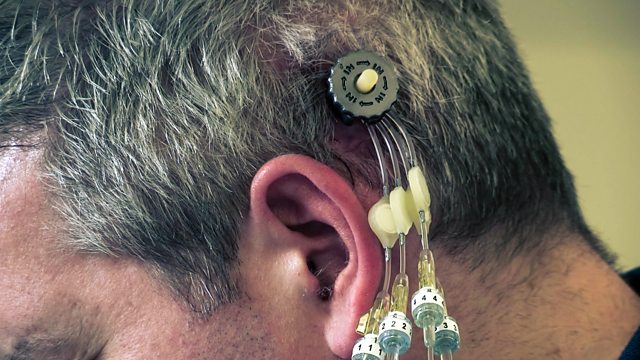
GDNF, an abbreviation of glial cell line-derived neurotropic factor, is a protein produced in the brain and promotes the growth of brain cells including those lost as a result of PD. The GDNF, discovered in the 1950's and first trialed in the 1990's, would be introduced via tiny, catheter-like mechanisms surgically inserted into the brain and then accessed via an external port drilled into the skull. The monthly infusions of either GDNF or placebo would be via this port into the volunteers' surgical implants that, over a two-day period, would be dispensed to the appropriate area inside the brain.

In 2019 Dr Whone (open link and scroll down for his YouTube lecture) presented the procedure as well as the results of the trial. Unfortunately, volunteers' results (this site also has a link to the Journal article) of the clinical trial had fallen below the required threshold. As this had not complied with what had been scientifically determined, the trial was to be discontinued. Consequently, the pharmaceutics company withdrew its support, much to the immense disappointment of the volunteers. It is interesting to note that the trial result images also showed that GDNF, with varying degrees of significance, appeared to have revived brain cells damaged by PD. Sadly, this form of evidence was insufficient for that trial to have continued.

Reflection

The reality check for a viewer who has not been parkinsed is the impact of the documentary's in-depth recording of the lives of a small sample of the 41 volunteers. The documentary goes a long way to bridging the gaps between merely reading about PD and actually seeing its debilitations manifest in real life. One bears witness, first-hand, to what the intruder is capable of doing when allowed.

There were times that I cringed, seeing how parkinsed people were treated during the documentary. GDNF volunteers' levels of anxiety - visibly that of Tom Isaacs - appear to have been raised when in hospital rather than being lowered. Here, I refer to certain triggers for parkinsed people that exacerbate anxiety and accompanying tremors.

Both the movie Awakenings and The Parkinson's Drug Trial: A Miracle Cure? are depressing, real life accounts of experiments and possible cures. In both instances, one can conclude that medical science and pharmaceutics companies invest enormous amounts of time and resources to achieve their goals. This is especially cruel for the GDNF trial because one has to assume that all volunteers, seduced by the possibility of a cure for PD, will now spend the rest of their lives with these implants (I hope I'm mistaken here!).

Also one may deduce, in the case of PD, that science marches on in search of new funding, new collaboration and new journal articles. Sadly, in the centre of the GDNF trial are the brave 41 who pinned their future on hope and faith but will remain parkinsed: flotsam at the edge of the world of PD and science.

Next, I will examine how I started to adapt to my growing affliction. In the words of Peter Quince in Shakespeare's A Midsummer Night's Dream I should say: "Bless thee [Ari], thou art translated...".


Friday, 17 April 2020

(3) PD experiment in a movie

Me and PD

My life with Parkinson's Disease (PD) - and it is reasonable to assume that it applies to others - has both comic and serious undertones. It is not an elegantly crafted Shakespearian play but contains elements of a soap opera. 

Like a soapie, I have recurring status and play different roles. Some days I am Ari, fighting the effects of Bradykinesia. This term refers to my slowed movements, shuffling, dragging my right foot when walking, constant tremors, occasional rigidity and freezing of actions. When I see my reflection in a shop window or full length mirror, I resemble an actor attempting to mimic someone who's had a stroke. Also, I have been asked why I am angry because, of late, I often have little or no facial expression. 

Regarding the recurring status, on other days I am a parkinsed person wrestling for seven years with Ari and his damned alternative, drug-free approach to PD. This involves my practitioner-research approach to PD where I first observe a PD-related issue, then try to figure out a practical solution based on my experience and common sense before trawling the internet or probing medical research. One example would be how to deal with the freezing of movement when dressing, by examining the role of muscle memory and association: but more of that later. Let me describe two experiments which you might find interesting and informative.

REVIEW: AWAKENINGS, the movie   

I have come across two extreme examples of the unpredictable nature of PD. The first is Awakenings available on pay-TV channels, a memoir of neurologist and prolific author, Oliver Sacks, that was a book made into a movie in 1990 starring Robin Williams and Robert De Niro. The second is a BBC documentary  entitled The Parkinson's Drug Trial: A Miracle Cure? First let's look at the movie.

The movie Awakenings (1990) is about seemingly catatonic patients in a psychiatric hospital in New York. The patients are mostly victims of encephalytis lethargica, an epidemic that might have started sporadically across Europe during the early 1500s and was then identified and labelled in the early 1900s. This neurological syndrome presented itself in two phases, the latter clinical phase resembling PD, which may explain why a PD drug was used on the patients.

The movie starts with a young boy gradually becoming dysfunctional and one sees the impact on his life as a teenager. Fast-forward about 50 years and that child is one of a group of adults, played by Robert De Niro, who appears to be displaying PD-like symptoms in a psychiatric hospital. In an attempt to bring him and others out of their catatonic state, an experimental drug called L-dopa is prescribed by Dr Sayer, played by Robin Williams, who has already made startling observations of some of his patients. Although L-dopa was developed specifically for PD, the symptoms presented by patients with encephalitis lethargica are similar, hence the doctor's decision to prescribe it. Dr Sayer, prior to joining the psychiatric hospital, was a medical doctor and serious researcher with a healthy regard for what is measurable and, consequently, what may be accepted as evidence.


What is evidence?

In his new job at the psychiatric hospital, Dr Sayer appears to turn a corner in his career. He starts to question the notion of evidence when, in an attempt to justify the need for L-dopa to be prescribed, he is reminded by his manager that the patients have been immobile for many years. Dr Sayer responds stating "...that people are alive inside...". The manager warns Dr Sayer not to expect the hospital to fund the L-dopa "trial" that would cost around $12,000 per month. However, hospital support staff, encouraged by his humane approach and his persistence, start donating small amounts of their own money for the "trial" to begin, which appears to put pressure on management. Hence, the manner in which evidence is gathered, structured and accepted, differs from fraternity to fraternity.


The L-dopa conundrum   

Unfortunately, once his patients take L-dopa it is obvious in the movie that Dr Sayer is unable to calculate a prescribed dosage required by each patient. It is interesting to note that in 2013, a journal article entitled The L-dopa Conundrum questions the presence of L-dopa and similar drugs by asking: "Should newly diagnosed patients delay taking L-dopa as long as possible or seize the day?" The question is being posed more than 50 years after the launch of the PD drug!

Next we'll examine the clinical trial and the use of GDNF and indulge in some reflection on both. 


Tuesday, 14 April 2020

(2) Parkinson's, mind games & "I"

The internet and mind games

One of the mind games I have experienced is when one does a Google search, for instance, on Parkinson's Disease (PD). It will produce millions of hits. However, in this case, most of the content will be associated exclusively with either a medical or a pharmaceutical context. This does not help the few of us who are not taking PD medication. Seldom are you invited to consider alternatives, unless you specify search terms such as "drug free", "natural remedies" or "PD exercises". If you visit the Fighting Parkinson's Drug Free site it states: "Whether you are fighting Parkinson's without medications or fighting Parkinson's with medications, everybody is welcome here!" 

In all fairness, I must acknowledge that Google will always search and then find information in response to my query. The resultant activity is a tailored response to that query, allowing Google to track and assist me in the future. This filtering system provides an enormous number of similar results rather than alternatives. Unfortunately, this can be simultaneously overwhelming and depressing. 
        

Possible diagnosis and early symptoms 

In my case, I may have been parkinsed as a result of traumatic brain injury. When I was a child, during the 1950's, I fell out of a moving car. I was told later that I had spent a number of days in hospital before being discharged. Fast forward to 2008 and I spent a night in hospital because of an intense headache. In between there was another possible trigger: the death of our son in 1999. This is my attempt to stitch together a series of personal traumas that may have led, directly or indirectly, to the lowering of my dopamine levels and the resultant PD. 

During the 1990's I was a power walker but by 2011 I had difficulty with my co-ordination so I was forced to stop walking outdoors and on uneven surfaces. Around 2012 I noticed that my right leg would tremble whilst urinating when standing. I ignored it but my wife insisted I see our GP who recommended I see a neurologist. After having an MRI to eliminate other possibilities, the neurologist declared I had PD. From then I have been conscious of PD, an intruder, often masquerading as another "me". This other "me" is frequently responsible for mind games!   

Regardless of these events - the 1950's car incident, the death of our son and their possible unintended consequences - from 2017 I started to vegetate indoors. It has been disturbingly fascinating to be aware that often I would feel the need to exercise yet the other "me" would convince me to rest. I wish I knew where to get a restraining order on "him".

Go left, right?   

By 2016 I started to favour my left hand during household chores, when driving and even when typing. I have been consciously trying to reverse this as I am a naturally right-handed person. Yet another mind game to make my left side, that currently represents my more confident side, the dominant one.

I believe that as the PD started on my right side, the diminished use of my right arm, and by default the right shoulder, has led to the intense right shoulder pain that used to wake me at night. In 2018 I started having monthly physiotherapy for that right shoulder pain. While it was always pleasant, its effect was short-lived. In 2019 I found a rehabilitation centre offering the BIG programme. While the exercise programme is rooted in sound principles, it is quite expensive so in 2020 I sought an alternative, namely, Biokinetics. The customised regime appears to be effective for me, especially when exercising under supervision and using the right equipment, rather than at home on my own. 

Another useful and constructive activity is dance. In 2019 my wife came across a Dance for Parkinson's class and I joined it. Emanating from the USA, this is for those who are parkinsed as well as for their caregivers. The class I have been attending in Gauteng, South Africa, has a few dozen participants many of whom are on some form of medication. However, they are all competent participants who make the class a stimulating one. Most importantly, I have observed that I am unlikely to be woken by a sore shoulder during the night following a dance class or Biokinetics! 

In my next post, I will examine two examples of PD treatment. The one is from a 1990 movie, set in the USA and ostensibly about movement disorders. The other, is a 2018 documentary about a recent clinical trial in the UK. From the perspective of one who is parkinsed, I will provide a context and some reflection on both examples.  


Sunday, 12 April 2020

(1) Parkinsons Disease & I

Introduction and context

I have been in South African higher education all my working life. During the latter years, since 2002, I provided teaching and learning support for academic staff till 2017, when I retired. My research has been on language issues as well as how to develop strategies in writers for whom English is another language.

I am also a practitioner researcher. This means that I attempt to solve a problem first by analysing the issue, then to draw on personal experience to provide a familiar context in order to consider possible solutions. Only after developing a solution will I delve into the possibility of underlying theories and broader schools of thought.    

In my career I enjoyed facilitating workshops, often requested to assist outside the social sciences, for instance, in science and engineering. However, since I was diagnosed with Parkinson's Disease (PD) in 2013, standing in front of any group of people - either academics or family and friends - has generated much discomfort that generally results in visible tremors. 

Being parkinsed (I hope you approve of my new descriptor) is like having my body under siege. My nervous system, muscles and accompanying organs all appear to have been hi-jacked and then used to hitch-hike, undetected, through me. The intruder is shrewd, as its goal appears to be to create doubt when I execute simple actions. This doubt leads to a breakdown in my confidence. Rather than give in, I decided first to analyse this siege and then attempt to deconstruct the war plan.

My response

I have come to the conclusion that being parkinsed is a mind game between the intruder-cum-hi-jacker and I! Should I fight back or roll over and play dead? That is why I have chosen Hamlet's opening lines of the fourth soliloquy in Shakespeare's Hamlet (Act 3, Scene 1) in my blog title.

"To be, or not to be: that is the question. 
Whether 'tis nobler in the mind to is suffer
The slings and arrows of outrageous fortune, 
Or to take arms against a sea of troubles,
And by opposing end them?"

I am attempting 'to take arms against [PD]' and 'by opposing' to stem the intrusion without PD drugs. Yes, I have not been on any drugs since my diagnosis in 2013. The mind games are exhausting and unpredictable and little appears to be known by pharmaceutical companies about, specifically, how to 'take arms'.

In forthcoming blog posts, dear reader, I will be sharing PD tips and tricks I have discovered. I will describe my attempt to counteract muscle memory, one of the greatest challenges to one who's been parkinsed. I will also provide food for thought regarding a recent international PD trial (2018) using GDNF and a movie about movement disorders called Awakenings (1990).